Intelligence you keep
Models run on your hardware. Prompts and files never leave the machine unless you send them.

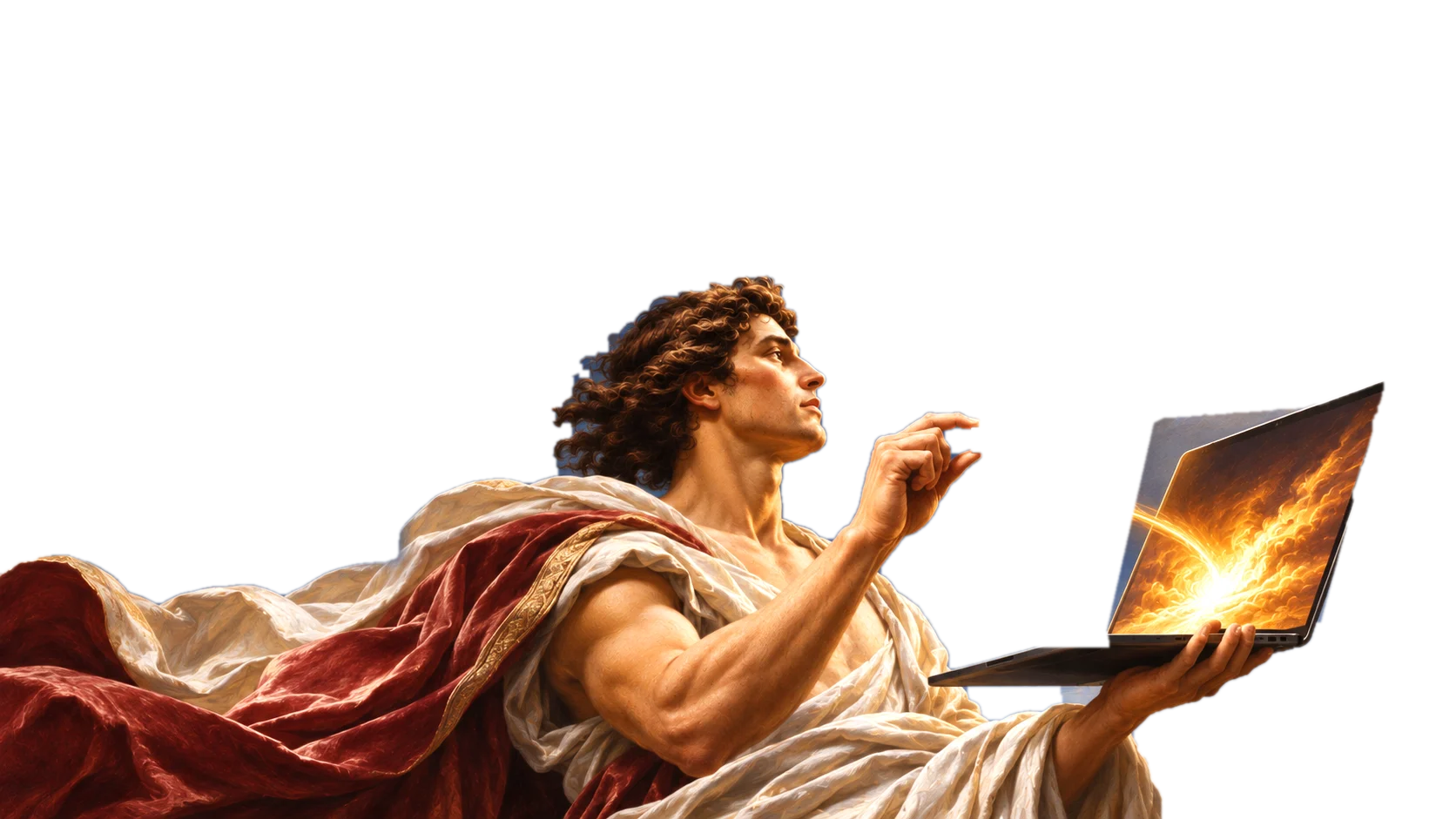
The gods kept intelligence in the cloud. Tokkey carries it home: a small cube that runs your AI on your own machine, with your data staying where it belongs.
Your model. Your keys. Your fire.
Everything the cloud kept for itself, brought down to a cube that plugs into the machine you already own. Nothing here asks you to rent back what was yours.
Models run on your hardware. Prompts and files never leave the machine unless you send them.
Tokkey pairs with your Mac in seconds and sets up the runtime for you. No terminal needed.
A single local endpoint your tools already speak, so the fire reaches every workflow.
Each move is a decision the cloud used to make for you, handed back. The interfaces below are working previews.
Plug in the cube and an assistant answers on your own machine. The menu bar shows what is running, which model, and whether anything left.
See it working ↗A model that lived in a data center now lives on the disk you own. It loads once and stays.
How loading works ↗No terminal, no account. The runtime finds the hardware, picks a model that fits, and starts a local endpoint.
Setup guide ↗One local endpoint that your editor, your notes, and your terminal can call. The fire reaches the workflow you already have.
Connect an app ↗Prompts, files, and memory stay on the machine. When a task needs more, the route out is visible, named, and reversible.
Privacy controls ↗Switch between the two columns to see what changes when the model lives with you.
Compare in detail ↗

Archimedes asked for one firm place to stand. Tokkey is that place: a fulcrum on your desk that moves models too large to hold, without ever handing them to the cloud.
Give me a point to stand, and I will move it.
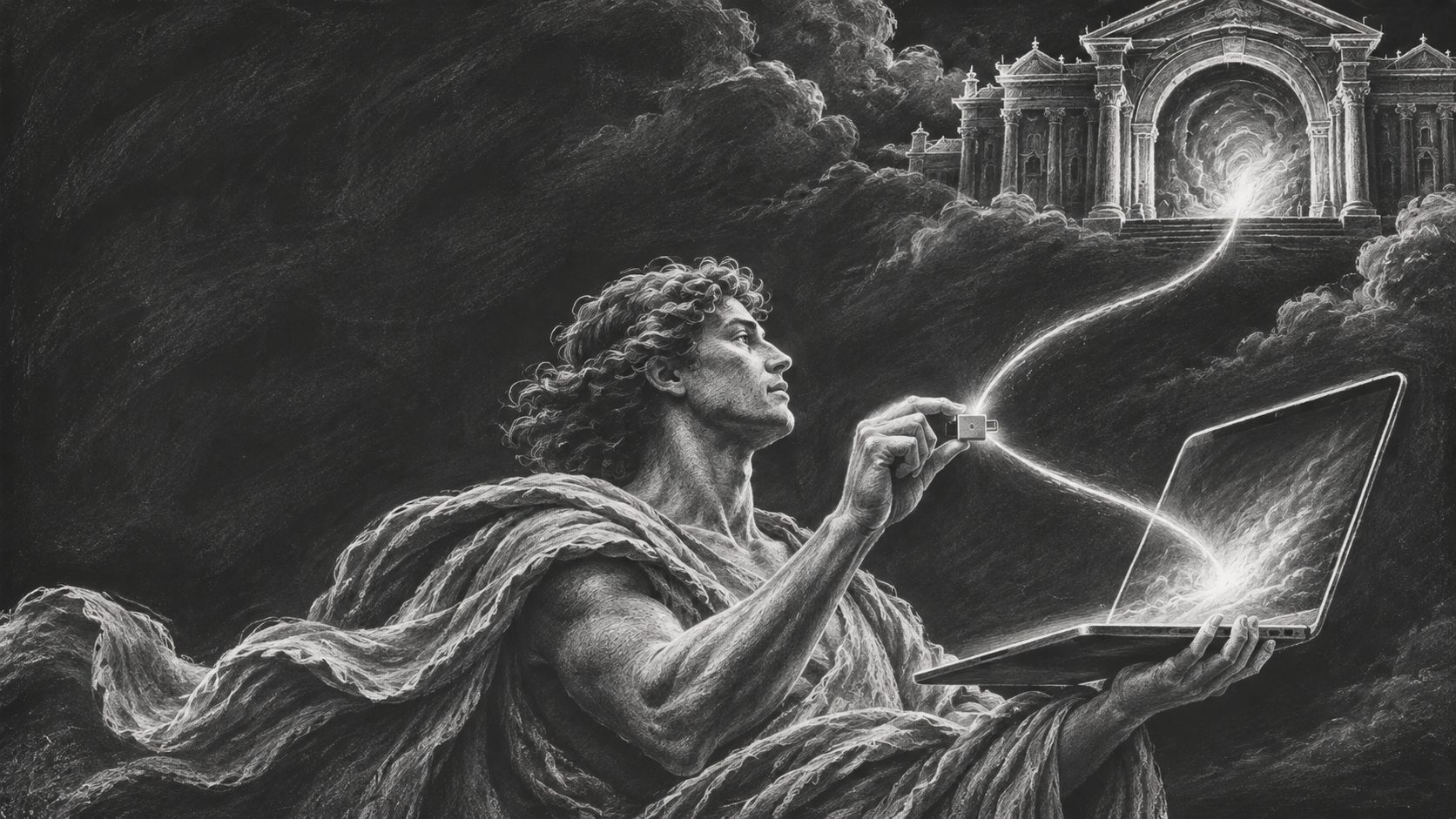
OneToken builds the infrastructure that brings intelligence home. The sketch underneath is the idea. The work on top is the research.
Scheduling, batching, and KV cache management for models running on the hardware people already own, where every megabyte of memory is spoken for.
SSD-aware loading and caching, so a model that does not fit in RAM can still start in seconds instead of minutes.
Fine-tuning and distillation small enough to run where the data already lives, instead of shipping it to a cluster.
A local endpoint the tools people already use can speak, so the model is infrastructure rather than another window.
Engineering notes from OneToken. Every claim has a workload and a reproducible setup behind it.
Archimedes never said the lever was the hard part. The hard part was a place to stand. For local AI, the model is the lever and the machine you own is the ground.
Read the essay ↗A faster token only counts when the system finishes the right task.
Read ↗How much useful work a model does per megabyte of memory and per watt, on hardware people already own.
Read ↗SSD offloading for models that do not fit in RAM, so a model starts in seconds instead of minutes.
Read ↗Which tasks stay on device, which may reach a selected cloud model, and how that choice stays visible.
Read ↗What should travel when an agent moves between devices, and what should not travel automatically.
Read ↗Personal intelligence should not become another monthly bill.
Read ↗Give me a place to stand, and I will move the earth.Archimedes, as told by Pappus of Alexandria


The cloud offers power to anyone who pays the rent. A sword in the stone answers only to the one it was drawn for. Your model should do the same.
Sovereignty, kept on the device.
Five principles we build against. Intelligence should follow the work, stay on the device you own, and never cross a boundary you did not choose.
Intelligence follows the work. A useful system carries the right context to the right capability, and the path stays understandable to the person using it.
A foundation of your own. Keep useful capability on your device. Change a model without starting your relationship with intelligence from zero.
One foundation, many ways to work. Inference becomes valuable when it supports an application, a decision, or a finished piece of work.
Local and cloud, by choice. Let routine and private work stay close. Ask for additional capability only within the boundaries you choose.
A boundary you can understand. Inspect the source, select what may be shared, and keep the ability to stop. Privacy is a set of controls, not a promise.
Ownership is a set of things you can see, change, and take with you. Try each control.
Swap the weights without resetting your relationship with intelligence. Memory and preferences stay when the model changes.
Learn more ↗Local by default. A task reaches the cloud only when you say so, to a model you named.
Learn more ↗Inspect what may leave, select it, and keep the ability to stop. Privacy as controls you operate.
Learn more ↗What the system remembers is visible and deletable. Continuity across devices never becomes hidden authority over your data.
Learn more ↗Whoso pulleth out this sword of this stone and anvil, is rightwise king born of all England.Inscription on the stone, Le Morte d'Arthur
Not by default. Everything runs on the device. If you choose to route a task to a cloud model, you name the model, you see what is sent, and the choice is recorded where you can read it back.
Your memory, preferences, and history stay with you. The model is a part you can replace; your relationship with it does not reset.
No. Plug the cube in and the runtime picks a model that fits your hardware and starts a local endpoint your tools already know how to use.
Always. Turn off the cloud route and nothing is sent anywhere. Unplug the cube and the local runtime stops.
Tokkey Editions. Winter '26.
Reserve your spotLeave your email and we’ll tell you when Tokkey is ready.
We’ll email you as soon as Tokkey is ready.